
Why OpenCharities exists
Giving works better when trust is supported by transparency. When donors can see how funds move and impact is visible rather than assumed, engagement becomes more sustainable for everyone involved.

Jelle Bets
Founder
In 2020, my mother was diagnosed with early-onset Alzheimer's. She was 56.
As her condition progressed and she moved into a nursing home in 2024, I felt a growing drive to contribute in a more meaningful way. With my background in banking and blockchain, my first idea was practical: start a charity in the dementia space focused on relieving emotional pain for patients and their families, while enabling them to create meaningful memories together.
From the start, I wanted it to work differently. Transparent donation flows, community-driven initiatives that could scale on intrinsic motivation instead of heavy overhead and bureaucracy. But I found it impossible to do this with the platforms that were available.
In exploring what it would take to build that, I realized it wouldn't make sense to do all this work just for one charity. Enabling these same benefits for all charities and impactful initiatives would have far greater reach.
That is where the idea of OpenCharities as a platform was born.
Across the charity sector, people give generously and with good intentions. But many donors experience a lack of visibility once their donation is made. Funds move into organizational structures, updates are delayed or abstract, and it is often difficult to understand what impact a specific contribution helped create.
This is not about bad intent. In many cases, it is the result of systems designed for a different era, one where transparency was hard to deliver, reporting was manual, and trust had to be assumed rather than supported by real-time information.
Globally, charitable giving exceeds €650 billion per year, yet a growing group of especially younger donors is turning away from traditional charities because they expect visibility, participation, and accountability by default.
It started from personal pain, but is now driven by the belief that this experience can be transformed into shared, lasting impact.
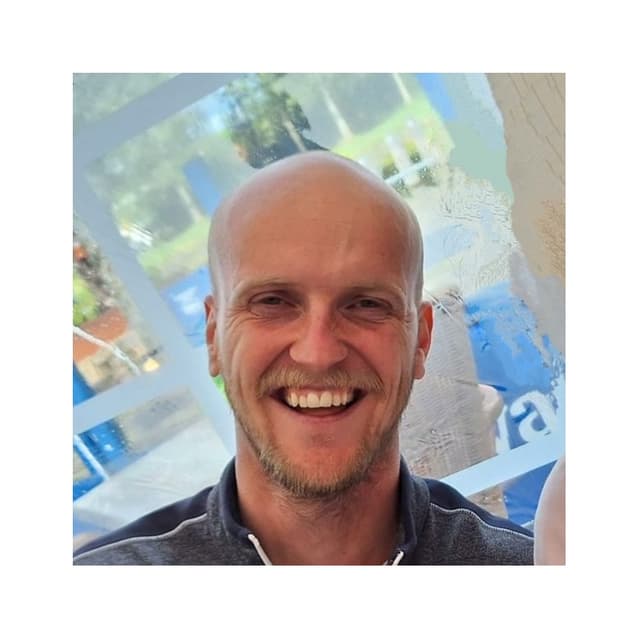
Thijs van Holthuijsen
Co-founder
After my friend committed suicide, I (accidentally) hosted one of the most viral fundraisers in the Netherlands.
In 2020 I paddled 42 km on a prone board, seven hours on the water, to break the silence around mental health after losing one of my best friends to depression. I expected a few donations from family. Instead it went viral, a documentary followed, and strangers across the country started giving.
Running that GoFundMe taught me something that has shaped everything since: it is brutally hard to show people what their donation actually did. The money arrived. The impact disappeared.
That question pulled me into the sector. For nearly four years at KWF Kankerbestrijding, one of the largest non-profits in the Netherlands, I worked on the digital experience for donors and supporters. The pattern I had hit on my own campaign repeated at scale: even the best-run charities struggle to close the loop between a gift and a verifiable outcome.
Giving works. The proof of giving is what's broken.
When Jelle described what he wanted to build, I recognised it instantly. He was describing the layer underneath the charity platforms: infrastructure where every euro is traceable from contribution to outcome, owned by the mission it serves.
That is the part I joined for. We are building OpenCharities to connect local initiatives, NGOs and companies on shared, transparent rails, so the next generation of giving is future-proof by default and the impact is visible to everyone who paid for it.
“My work lives at the intersection of marketing, product and impact. Using tech to make the world a little bit better.”
The gap between giving and impact
In most parts of our digital lives, visibility is normal. We can track payments, shipments, and investments in real time. In giving, that feedback loop is often missing.
Limited visibility
Donors have little insight into how their donations are used. Updates are often delayed or abstract, and there is no donation-level traceability or real-time feedback.
Fragmentation
Every charity has its own reporting format and impact claims. There is no common framework for comparing accountability across organizations.
Exclusion
Smaller, community-led initiatives often struggle to access funding despite strong local impact. The system rewards scale and reporting overhead, not outcomes.
By 2035, transparent giving is the default, not the exception
Every charitable donation, from a €10 individual gift to a €10M corporate allocation, flows through accountable infrastructure. Donors see where their money goes. Charities that meet the standard get funded.
For donors
Every euro is traceable from the moment you give it to the outcome it creates. Real impact, visible in real time.
For charities
Charities and initiatives gain access to funding that is aligned with their impact and progress. Transparency lowers the barrier to trust.
For communities
Local communities, including in developing regions, can self-organize around shared challenges and access funding transparently, without relying on complex intermediaries.
Accountability, built into the infrastructure
Charity accountability frameworks exist. Blockchain-based donation tracking exists. Nobody has built them as one integrated system, where the standard and the rails are designed for each other.
The accountability framework
What charities commit to when they join. How donation flows are tracked and how outcomes are reported and made visible to every donor.
The transparent infrastructure
The technical layer that makes meeting the standard possible in a transparent way. Every donation traceable, every outcome documented.
The OpenCharities Foundation
An independent foundation that defines what accountability means, and allocates donations to initiatives via the Foundation Safe — a public, multi-sig wallet on Gnosis Chain. Funds accumulate and are disbursed in monthly allocation cycles. The platform infrastructure fee (7%) makes transparent giving possible. Together with partners such as Dementie Academie, we are validating how transparent, community-driven giving works in practice.
Launching soon
Ready to build the future of giving?
Whether you're a company looking to transform your impact programs, or a charity ready to lead on transparency — we'd love to talk.
Ready to take control of your impact?
Let's discuss how OpenCharities can power your giving programs with full transparency and real-time tracking.
Get in touch